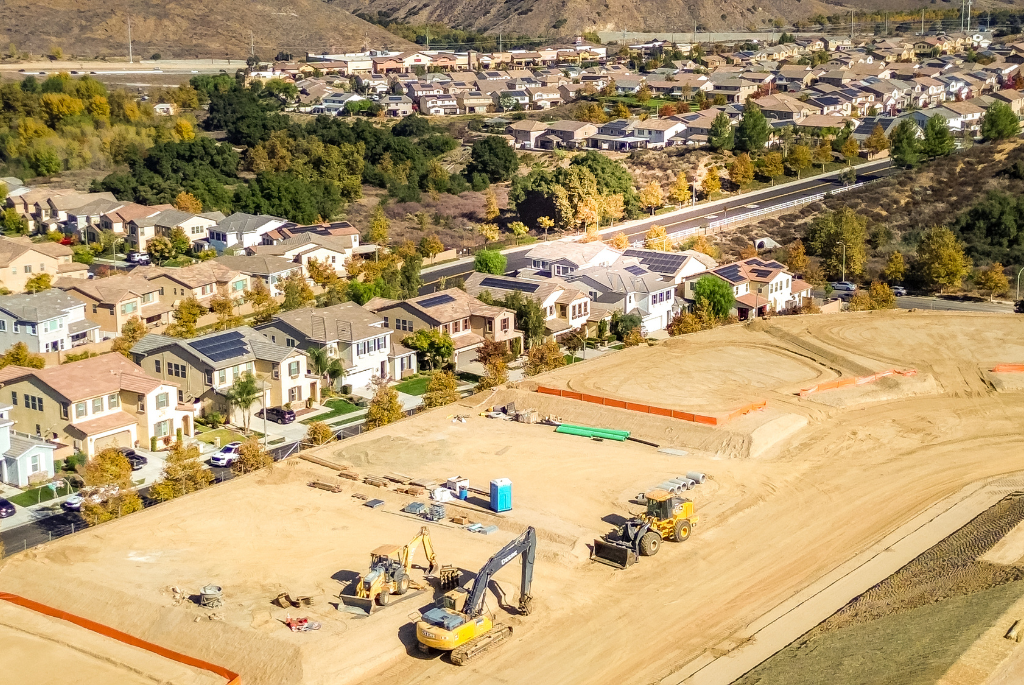
Driven by population growth, urbanization, and an urgent need for affordable homes, the demand for large-scale housing developments has never been higher. As a builder, you may be feeling more and more pressure to complete projects faster, maintain high quality, and control costs, all while navigating labor shortages and job site safety concerns.
Construction robotics is a solution that helps developers meet these challenges with tools that improve efficiency, precision, and safety. Once considered experimental or niche, these technologies are now practical and increasingly accessible for real-world, large-scale housing projects. We’ll explore how robotics can transform the way you plan, execute, and deliver multi-unit residential developments.
How robotics improves project efficiency
One of the most immediate benefits of construction robotics is its ability to automate repetitive, labor-intensive tasks. Bricklaying robots, automated cutting machines, and precision layout systems streamline workflows that would otherwise require significant manual effort. These tools deliver consistent output and reduce delays due to human error or fatigue. Large-scale housing projects, which often involve hundreds of similar units, particularly benefit from robotics’ ability to repeat tasks accurately at scale.
For example, robotic bricklayers like the Hadrian X system can lay thousands of bricks per day with consistent spacing and alignment, dramatically reducing the time needed for exterior walls. Builders report faster project timelines and more predictable progress as robotic systems can operate around-the-clock without breaks, keeping schedules on track and reducing costly downtime.
Robotics also helps minimize coordination bottlenecks between crews. Automated equipment can work simultaneously on multiple aspects of a project, allowing human workers to focus on specialized tasks while robots handle repetitive operations. This is particularly valuable in high-density developments where overlapping schedules can otherwise create significant delays.
Why robotics enhances build quality and consistency
Robotics significantly improves build quality. Machines can execute tasks with millimeter-level precision, ensuring that each unit meets its exact design specifications. This consistency reduces errors that might compromise structural integrity, energy efficiency, or overall aesthetics. Many robotic systems also track performance data, allowing you to monitor quality in real time and adjust processes as needed. For example, robotic cutting tools can produce uniform panel sizes for interior walls, eliminating gaps or misalignments that often occur with manual work.
With fewer mistakes, you can expect lower long-term maintenance costs, fewer warranty claims, and stronger overall project outcomes. Robotics gives you a reliable way to maintain high-quality construction across large housing portfolios. It also provides valuable documentation, with digital records of completed work, which can support inspections and compliance verification.
How robotics reduces job site risks and improves safety
Safety is a major concern on any construction site, especially large multi-unit projects where crews work in close quarters and perform high-risk tasks. Robotics can handle hazardous jobs such as lifting heavy materials, operating at heights, or performing repetitive tasks in confined spaces. Automating these activities decreases the risk of injuries significantly. Robots can also operate in conditions that would be too challenging for humans, including extreme temperatures or dusty environments.
Reduced accidents also lower insurance premiums and workers’ compensation costs, providing financial as well as operational benefits. For example, automated material handling systems prevent repetitive strain injuries among workers who would otherwise manually lift heavy panels or pallets. Over time, this contributes to a safer, more productive workforce and reduces downtime associated with accidents or health-related absences.
How robotics helps builders address labor shortages
The construction industry continues to face a shortage of skilled labor, which is particularly acute in large-scale housing projects. Robotics helps you maintain productivity by taking over repetitive or strenuous tasks. Importantly, robots augment human workers, freeing teams to focus on higher-value, skilled activities such as supervision, complex installations, and high-quality inspections.
By modernizing the job site, robotics also helps attract younger talent to the construction field, offering a more technology-driven, less physically exhausting work environment. This helps you retain skilled workers while appealing to new hires who might otherwise seek employment in other industries.
The cost considerations and ROI of robotics
While robotics requires up-front investment, the long-term returns can be substantial. You can save on labor costs, reduce rework, and shorten construction schedules, all of which directly impact project profitability. Robotics also enhances resource planning by minimizing material waste and allowing for more predictable budgeting. Operational uncertainty is reduced as performance becomes more consistent and measurable.
Financing options, leasing programs, and equipment rental models make these tools more accessible, even for midsize developers, making the investment increasingly practical. Builders who incorporate robotics often see a measurable return on investment within the first few projects, thanks to reduced labor hours, fewer errors, and faster project turnover.
What the future of robotics looks like for large-scale housing
Construction robotics is poised for continued growth. Emerging technologies such as autonomous heavy equipment, robotic finish work, and drone-integrated workflows will expand automation’s scope. AI and machine learning will make robotics smarter, capable of adapting to complex site conditions in real time. Robotics will also play a key role in modular, off-site, and prefabricated construction methods, enabling faster and more cost-effective housing delivery.
By integrating robotics with digital tools like BIM and project management software, you can further optimize planning, scheduling, and quality control. These technologies promise to make large-scale housing builds more predictable, efficient, and cost-effective than ever before.
Robotics can enhance the construction industry’s future
Construction robotics is rapidly moving from optional technology to essential tools for large-scale housing builds. These tools deliver clear benefits in speed, precision, safety, labor management, and long-term cost savings. As adoption increases, builders who embrace them will be better prepared to meet rising demand and deliver high-quality, efficient projects.