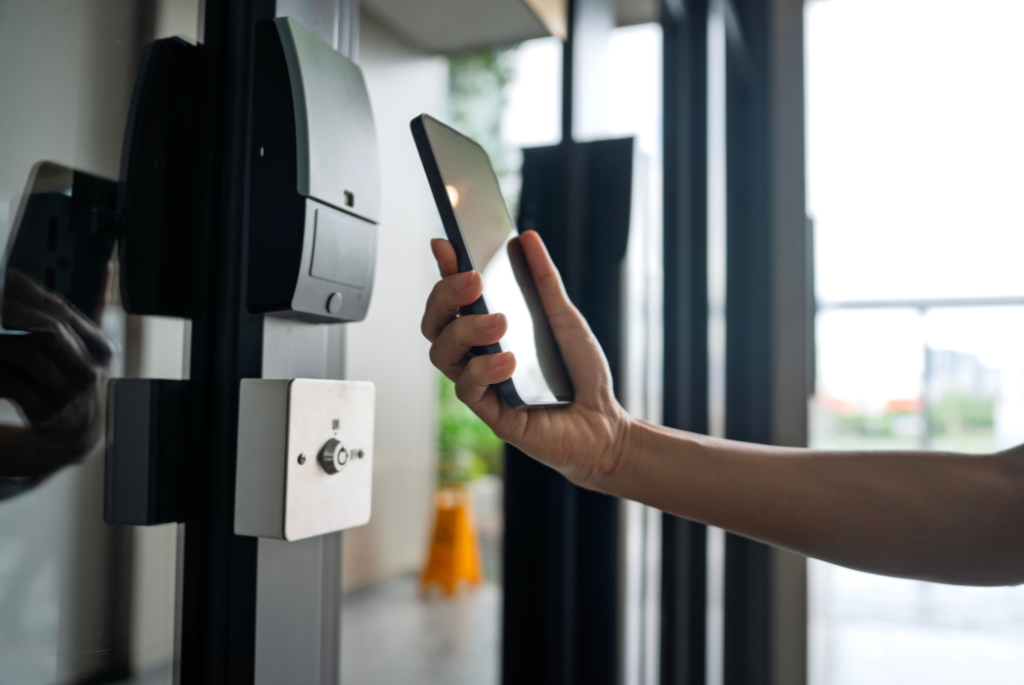
Keyless entry systems deserve a stronger strategic conversation in multifamily housing than “it’s neat tech you might want someday.” Research shows that operators are actively deploying electronic access control to meet resident demand and boost operational efficiency, but a surprisingly large portion of the industry still leans on traditional methods. The difference is significant because access choices influence staff workflows, resident satisfaction and long-term portfolio value.
Access control as an operational strategy
In a 2024 Parks Associates study, 62% of surveyed multifamily owners and managers say they plan to deploy or upgrade access control solutions to meet residents’ and staff’s expectations rather than simply chasing technology for its own sake. This data suggests residents increasingly expect smart access features, and managers are planning accordingly.
Meanwhile, industry research shows that traditional metal keys are still common. In a KeyTrak report, 53% of multifamily professionals only use traditional keys, and a majority of those respondents have no plans to implement smart locks. This is not a rejection of modernization. Instead, it reflects regional, operational and cost considerations that shape adoption decisions.
What smart entry systems really bring to operations
Smart entry systems do more than eliminate keys. They offer remote credential management, automated access control across common areas and real‑time visibility into access activity. These are capabilities that matter most in properties with high turnover or decentralized teams. Remote management can reduce the staff time tied up in rekeying and key distribution while providing audit trails that support accountability and risk management.
For property managers, this can translate into measurable operational gains. For instance, when smart access is integrated with property management systems, move‑ins and move‑outs become smoother. Codes or mobile credentials can be activated or revoked automatically, reducing manual overhead and potential mistakes. Managers can also issue temporary access for maintenance teams, contractors or guests without meeting them on-site.
Of course, not every asset benefits equally. In smaller buildings with stable tenant populations or markets where residents show little demand for digital convenience, the operational lift from keyless systems may not justify the cost.
Resident experience isn’t monolithic
For residents, technology can serve as a differentiator. Broad industry surveys show that smart technologies like smart locks and keyless entry are among the most commonly adopted smart features in multifamily properties, reported by over 90% of decision‑makers engaged in smart tech deployment. This reflects tenants’ growing expectation for ease of access through mobile credentials or keyless methods.
However, preferences vary across demographics and regions. Some renters prioritize familiarity and simplicity, especially in markets where transient populations are lower or where older age groups dominate. Other tenants, particularly in urban and high‑amenity properties, expect seamless digital access as part of overall community convenience. This mixture of resident needs is why many properties adopt hybrid solutions that support mobile apps, fobs and cards alongside traditional options.
Where the digital access argument falls short
The industry narrative that “everyone should go digital” overlooks several nuanced points. Security is not universally seen as better. In the KeyTrak survey, only a minority of respondents believed smart locks were inherently safer than metal keys. Some operators pointed out that keyless systems introduce dependencies on software, network connectivity and battery power that must be carefully managed.
Cost and complexity matter. Upgrading to smart access requires up-front investment in hardware, software, installation and training. These costs are more challenging to absorb in markets with modest rent premiums.
Implementation challenges aren’t trivial. Digital systems have edge cases, from battery failures to network outages, that require clear operational plans and resident communication protocols.
These points do not negate the value of keyless systems, but they show the decision is not always straightforward.
Choosing the right access solution for your property
Evaluating multifamily keyless entry requires a context-specific approach.
Start with resident expectations in your market segment. What do prospective and existing tenants value most?
Assess staff capacity and workflows. Do your operations teams have the bandwidth to manage hybrid systems or digital credentials effectively?
Consider integration with existing systems such as property management software and security infrastructure. True efficiencies come when systems talk to each other.
In some scenarios, a phased or hybrid deployment that begins with common area access and then pilots unit‑level keyless entry can help manage cost and adoption barriers while delivering early wins.
Making the right decision for your property
Keyless entry solutions for property managers aren’t automatic upgrades or universal solutions. They’re tools that can streamline operations when chosen with a clear understanding of operational needs and resident expectations. At the same time, traditional access methods remain sensible in specific contexts. Discuss this with your team and residents, weigh the operational trade‑offs and tailor your approach rather than following a one‑size‑fits‑all script.