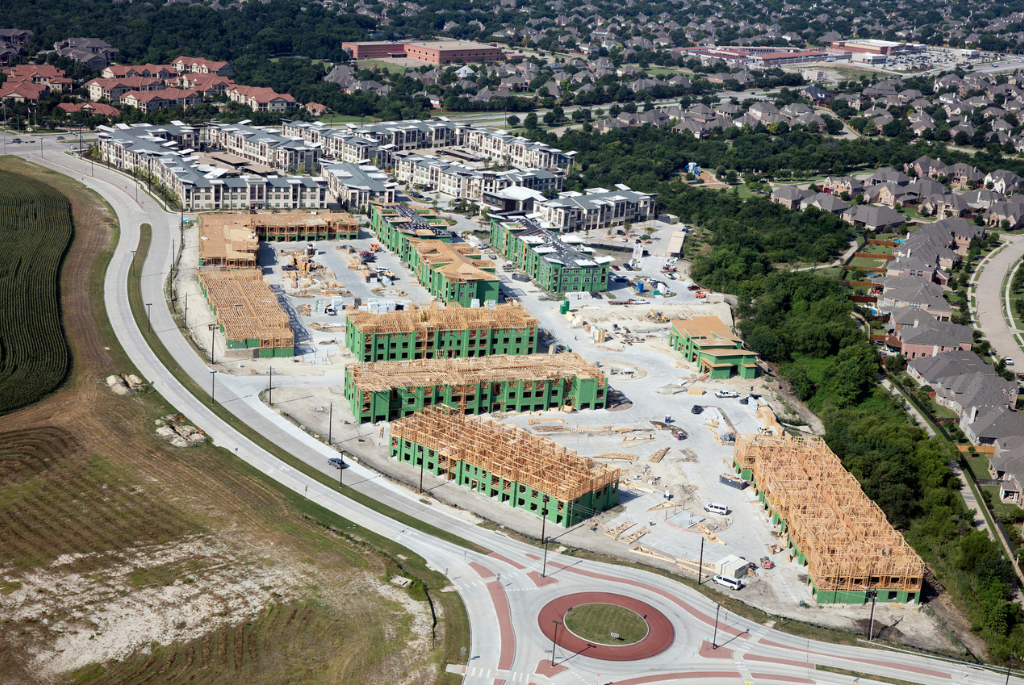
How drones, AI, and digital tools are transforming residential construction
Technology is transforming residential construction. Nowhere is this more evident than on modern job sites. Drones, artificial intelligence (AI), and digital tools are changing the way builders plan, monitor, and execute projects. These technologies enhance efficiency, reduce costs, improve safety, and facilitate better collaboration among teams.
As a builder or developer, embracing these technologies is no longer optional. You should implement them to keep your business competitive. This article examines how drones, AI, and digital tools are transforming residential construction trends, the benefits and challenges of their adoption, and what the future holds for modern home building technology.
The use of drones in modern residential construction
Drones have quickly become a staple on construction sites, offering capabilities that were once time-consuming and costly. They are used for aerial surveys, site inspections, and progress monitoring. Drones provide high-resolution imagery and data within minutes. This allows you to detect issues early, track project timelines, and maintain accurate records without the need for manual inspections.
Beyond efficiency, drones enhance safety by reducing the need for workers to access hazardous or hard-to-reach areas. Builders can monitor rooftops, scaffolding, and large plots of land without putting crews at risk. In both single-family and multifamily projects, drones offer a cost-effective way to manage construction sites, improving accuracy and visibility.
AI applications changing construction workflows
Artificial intelligence is transforming the way construction projects are planned and executed. AI algorithms analyze vast amounts of data to optimize scheduling, resource allocation, and risk management. Predictive analytics can forecast potential delays, equipment needs, and budget overruns, allowing your company to make smarter, proactive decisions.
AI also enhances quality control. By analyzing design models and site images, AI systems can identify errors or deviations from plans, reducing rework and material waste. When integrated with project management software, AI enables your business to streamline communication, track progress, and make data-driven decisions that improve overall efficiency on residential construction sites.
Digital tools enhancing construction efficiency
Digital tools, such as 3D modeling, BIM (Building Information Modeling), and virtual design platforms, are transforming the way builders plan and collaborate. These tools allow your teams to visualize projects in detail before construction begins, identifying conflicts, optimizing layouts, and reducing costly on-site adjustments.
Mobile apps and cloud-based platforms provide real-time communication, reporting, and document sharing between architects, builders, and subcontractors. With these tools, your teams can respond quickly to changes, track progress, and maintain accurate records. By combining digital construction tools with drones and AI, you can create smarter, more efficient construction workflows that reduce errors and accelerate project timelines.
Benefits of technology adoption on residential construction sites
Adopting drones, AI, and digital tools provides multiple benefits, including:
- More productive projects
- Shorter timelines
- Optimized workflows
- Improved accuracy
- Reduced reworking
- Less material waste
- Enhanced safety through remote monitoring and predictive analytics
As a builder, these innovations provide you with a competitive advantage. Buyers increasingly value homes built with modern, tech-enabled practices, and builders who integrate these technologies demonstrate professionalism, efficiency, and sustainability—embracing smart construction technology positions your company as a leader in residential construction trends.
Challenges and considerations for builders
Despite the clear benefits, adopting these technologies comes with challenges. Up-front investment in drones, AI platforms, and digital tools can be significant. You will also need to train staff and integrate new workflows with existing processes.
Data management and cybersecurity are important considerations as digital systems store sensitive project and client information. Some teams may resist adopting new technologies, requiring change management strategies. You must weigh these factors carefully to implement technology effectively and maximize your return on investment.
Case studies and real-world examples
Several residential projects demonstrate the transformative impact of technology. For example, builders using drones for weekly aerial surveys reported a 30% reduction in on-site delays. The Construction Management Association of America reports that companies using drones also experienced a 20% reduction in safety incidents at construction sites. Digital modeling allowed teams to identify design conflicts before construction, saving time and materials.
These case studies highlight that integrating drones, AI, and digital tools is a practical solution that enhances safety, efficiency, and profitability. If your company adopts these practices early, it can gain valuable experience and market differentiation.
The future of residential construction technology
Looking ahead, construction sites will become even more digital and connected. AI-driven automation, robotics, and IoT-enabled devices will streamline tasks and enable real-time monitoring of every project aspect. Smart construction sites will allow builders to plan, execute, and manage homes with greater precision and efficiency than ever before.
Workforce skills will evolve in tandem with these technologies, emphasizing data analysis, digital literacy, and remote management capabilities. Builders who embrace these tools today will be well-positioned to lead in modern home building technology and smart construction innovation.
The technologies of tomorrow in home building
Drones, AI, and digital tools are reshaping residential construction sites, improving efficiency, safety, and collaboration. These technologies offer your business the opportunity to reduce costs, enhance quality, and remain competitive. While challenges exist, the long-term benefits are clear. Embracing innovative construction technology is essential for delivering high-quality, modern homes.