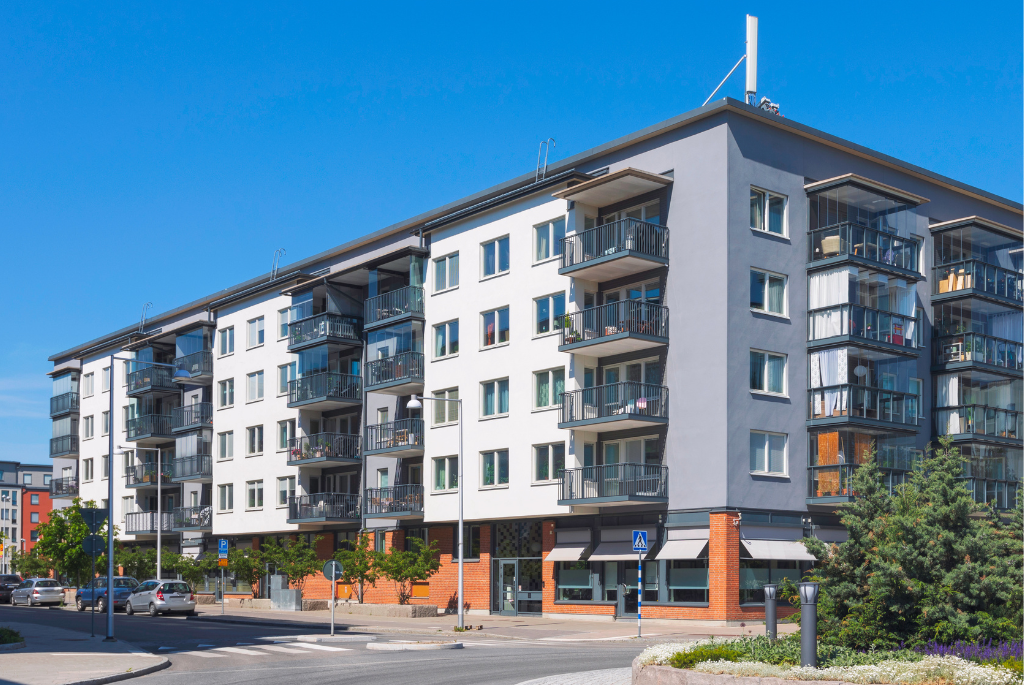
National trends often describe ground-floor retail as a driver of vibrancy in mixed-use developments. However, regional experience tells a different story. Strategically placed retail can support financial performance, while poorly located retail may weaken a project. The key is how developers evaluate ground‑floor retail, balancing market conditions, pedestrian dynamics and tenant demand to create spaces that truly perform rather than simply fill a design checklist.
The role of retail in mixed-use
Many developers default to a ground‑floor retail strategy because it looks good in renderings and supposedly “activates” the street, and sometimes that works spectacularly well. For example, Market Street in The Woodlands, Texas, has maintained strong leasing and foot traffic for over 20 years by emphasizing walkability, high-quality retail tenants and community programming. This proves that street‑level retail spaces can anchor a vibrant place.
However, not all markets or developments can replicate that success. National assumptions about retail as the center of mixed-use projects often overlook how much consumer behavior and regional economics vary. In many secondary or suburban markets, developers find themselves with empty or underperforming storefronts because pedestrian demand wasn’t strategically assessed before design.
How developers evaluate ground‑floor retail
Developers typically evaluate ground-floor retail using several practical factors:
1. Context and pedestrian traffic: Active street life matters. Research from Montgomery County’s recent mixed‑use study shows that ground‑floor retail thrives in walkable, “retail‑friendly” districts where a large mass of uses and people already exists or can be realistically created. Placing retail in a building next to a parking lot or where daily foot traffic is minimal often produces poor leasing results. Real pedestrian traffic isn’t about vehicle counts; it’s about people on foot. Retail designed for drive‑by exposure often fails unless accompanied by nearby anchors like grocery stores, transit stops or dense residential clusters.
2. Tenant feasibility and flexibility: Retail needs space that works operationally. Multifamily News has noted that odd or residual ground‑floor spaces that are shoehorned into a footprint late in planning often sit empty because tenants find them impractical or expensive to build out. Thoughtful planning should arrive at dimensions, utilities and access that align with what potential retail users actually need.
3. Design integration over decoration: Active retail doesn’t happen by placing signage next to a sidewalk. It’s about designing facades, heights and entryways to invite movement and lingering. Research shows that pedestrian‑oriented design, including building transparency, street-level access and mixed-use density, directly correlates with retail success in mixed-use developments. Even if a ground-floor space exists, a blank or garage-heavy frontage rarely generates the vibrancy needed to support leasing or community engagement.
4. Market demand and lease risk: Even if design and location are optimal, the economics have to stack up. Retail markets vary regionally, and even within sprawling metros, a single corridor can outperform another by orders of magnitude. Developers should evaluate demand drivers, such as demographics, income levels, tourism, daytime workforce and transit access, before committing to retail uses. In markets with lower foot traffic or weak demand signals, reallocating some ground-floor square footage to more flexible uses, like coworking, community or office space, might yield better returns.
Common assumptions developers should reconsider
Several common beliefs about retail in mixed-use development deserve closer scrutiny.
Retail equals success. The notion that ground‑floor retail automatically makes a project more successful is rooted in urban design ideals, not always in hard market data. In some suburban or emerging markets, retail space sits vacant for years because the surrounding demand hasn’t matured to support it.
Pedestrian traffic will appear if you build for it. Walkability is situational. Adding retail frontage alone doesn’t guarantee pedestrian traffic or retail success. Areas with strong transit, mixed uses or entertainment nodes are far more likely to sustain retail than rigidly planned blocks.
Ground‑floor retail works best in dense urban cores or well-connected mixed-use districts. In contrast, squeezing retail into projects in less walkable environments because “it’s standard” tends to underdeliver.
Careful planning helps ensure retail space serves a real purpose rather than simply filling ground-floor square footage. This often means analyzing where customers are concentrated, how they move and how tenants will capitalize on that movement.
Practical takeaways for builders and developers
Developers can apply these insights in several practical ways.
Start with analysis, not aesthetics. Before allocating street‑level square footage, run pedestrian traffic models or observe patterns at comparable nearby nodes. Look at transit flows, event pedestrian spikes and residential footpaths.
Embrace adaptability. Retail strategy shouldn’t be rigid. Design ground floors that can adapt to office, fitness, childcare or pop-up uses if retail demand softens. Flexibility often protects a project’s financial performance against retail market volatility.
Partner early with potential tenants. Engage retailers, grocers and service operators during planning. Their insights can refine space design and lease terms so that what you build is genuinely leasable.
Scale appropriately. Big, singular retail boxes rarely fit the needs of smaller local operators. Offering a mix of unit sizes encourages a more diverse tenant base and often leads to stronger combined demand.
Strategy over assumption
When done with planning and a deep understanding of context, ground‑floor retail can be a powerful part of mixed‑use development planning. However, it isn’t a universal cure for underperformance or a guarantee of vibrancy. Evaluate retail as one piece in a larger economic and design puzzle, not as a checkbox on a planning form.
Careful analysis and flexible planning help create retail spaces that remain economically viable and attract real activity.