A growing housing shortage across the U.S. is putting pressure on both urban and suburban communities. Individuals and families are confronted by rising home prices, limited land availability, and increasing population growth, which make it harder to find affordable housing.
Multifamily housing solutions provide a practical and scalable approach to addressing these challenges. By building apartments, condominiums, and other high-density residential projects, your construction company can provide more housing units in less space while meeting modern expectations for comfort, design, and sustainability. This article explores how multifamily housing contributes to solving the housing shortage, its benefits for residents and communities, and key trends that you should know.
Understanding the housing shortage
The current housing shortage is a result of a combination of factors. Population growth continues to outpace new home construction, leaving many prospective buyers and renters struggling to find affordable options. Land scarcity, particularly in urban areas, further limits the ability to build single-family homes. Rising construction costs and material shortages have only compounded the problem.
For renters, the shortage translates into higher rents and fewer choices. For potential homeowners, it means increased competition and rising home prices. Communities are also affected, with growing demand for housing putting pressure on infrastructure, schools, and public services. Addressing this shortage requires innovative solutions, and multifamily construction trends are a key part of the response.
How multifamily housing addresses supply challenges
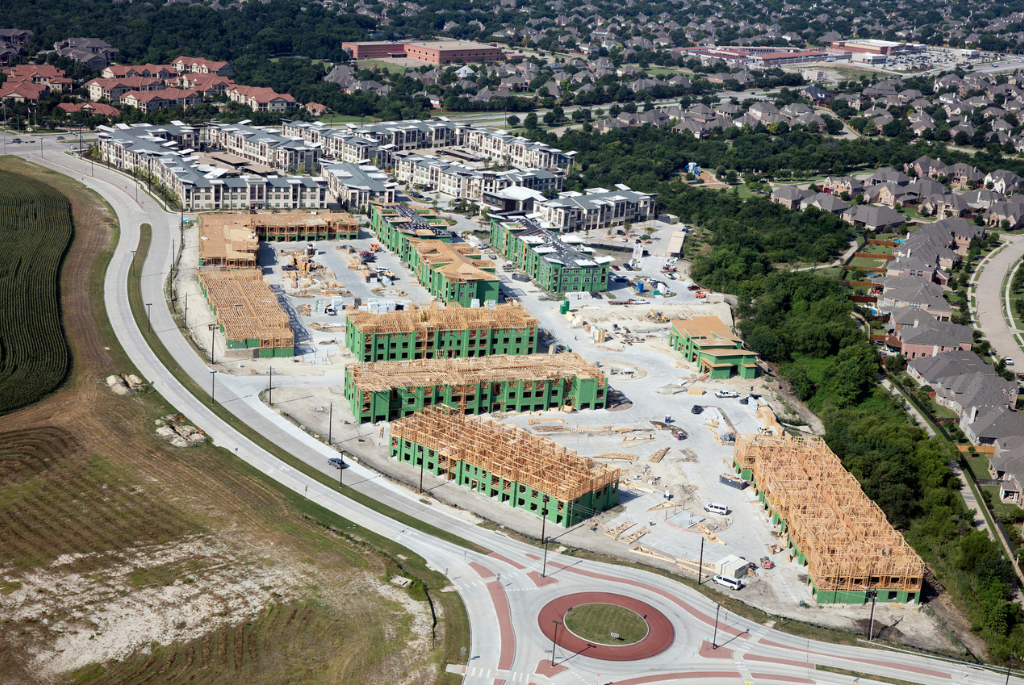
Multifamily housing allows you to maximize limited land resources by constructing several units on a single parcel. High-density developments efficiently use space in both urban and suburban areas by providing more homes without expanding the urban footprint.
For your construction company, multifamily projects offer scalability and shorter development timelines compared to large single-family subdivisions. Your business can build multiple units simultaneously, reducing per-unit construction costs and speeding up occupancy. Additionally, multifamily housing aligns with renter demand and creates steady cash flow through higher occupancy rates. This makes it a strategic choice for addressing both supply shortages and market demand.
Benefits for communities and residents
Multifamily developments offer numerous advantages beyond simply adding units to the market. They help increase affordability by providing rental and ownership options at a range of price points. By attracting diverse populations, these developments contribute to mixed-income, inclusive communities.
From an urban planning perspective, multifamily housing promotes sustainable growth. High-density developments reduce sprawl, preserve green space, and encourage the use of public transit. Residents also benefit from shared amenities, including fitness centers, communal spaces, and nearby retail stores, which help create vibrant, connected neighborhoods.
Market trends in multifamily construction
Multifamily construction is expanding rapidly in both urban and suburban markets. Cities with limited land, such as New York and San Francisco, are experiencing continued growth in vertical apartment projects while suburban areas with growing populations are attracting low- and mid-rise developments.
Modern multifamily projects often incorporate smart home innovations, energy-efficient designs, and high-quality finishes to appeal to tech-savvy and environmentally conscious renters. These projects reflect broader residential construction trends in which comfort, sustainability, and technology are increasingly valued. By adopting these features, you can differentiate your developments from those of your competitors and attract long-term residents.
Challenges and considerations
While multifamily housing is an effective solution to the housing shortage, you should anticipate challenges. Zoning regulations and permitting processes can slow project timelines, especially in urban areas. Community opposition, often framed as “not in my backyard” (NIMBY), can create additional hurdles.
As a builder, you must also strike a balance between affordability and construction quality and amenities. Infrastructure, such as roads, utilities, and public transit, needs to support higher-density living. Thoughtful planning and collaboration with local authorities are crucial to ensuring that your company’s multifamily projects are both successful and well-received by the community.
Future outlook for multifamily housing
The outlook for multifamily construction remains strong. Continued population growth, rising urbanization, and shifting lifestyles sustain the ongoing demand for apartments and condos. Government incentives and policies aimed at affordable housing are further incentives for your business to invest in multifamily projects.
Emerging trends include sustainable and energy-efficient designs, mixed-use developments that combine residential and commercial spaces, and the integration of technology to improve resident experience. If your company strategically plans for these trends, it will be well-positioned to meet housing demand and make a meaningful contribution to solving the national housing shortage.
Multifamily housing as a solution to the housing shortage
Multifamily housing solutions are essential for addressing the ongoing housing shortage. These developments offer scalable, affordable, and sustainable options for communities, providing builders and developers with strategic market advantages. By embracing residential construction trends and incorporating modern home features and smart home innovations, multifamily projects can meet the needs of today’s residents and shape the future of urban and suburban living. When your construction company invests in multifamily housing, it responds to market demand and actively contributes to solving one of the most pressing challenges in residential construction today.