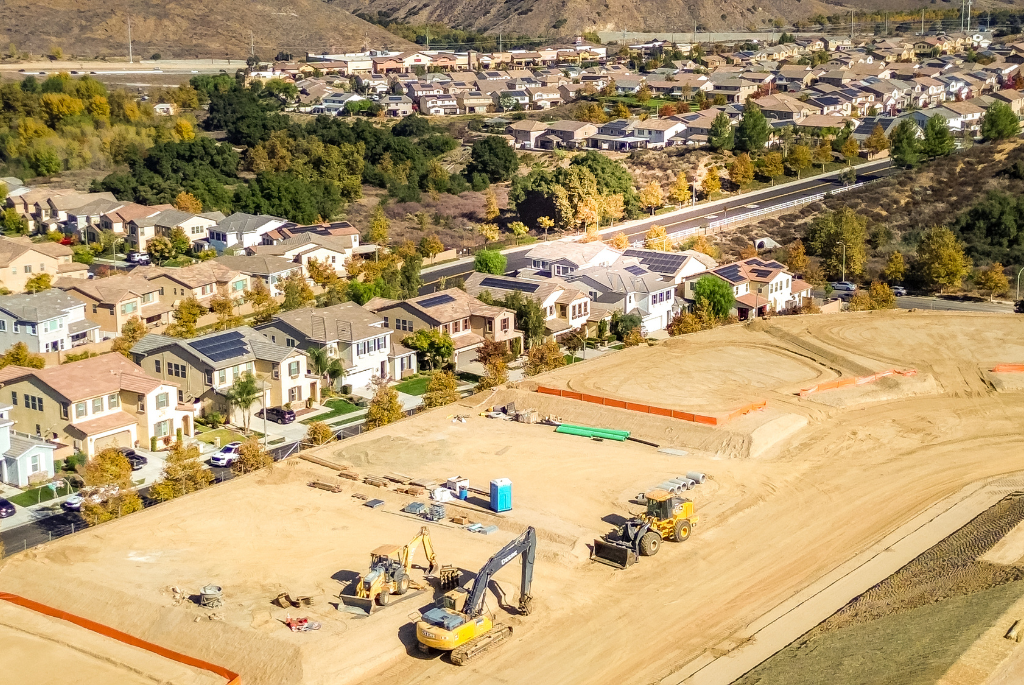
Indoor air quality (IAQ) is widely recognized as an important factor in new construction. However, builders don’t always agree on when or how to apply these solutions. It all comes down to cost, conditions and regional factors.
Some teams feel indoor air quality in new homes is just as important as structure, durability and efficiency. Other teams feel it should only be added when required by budgets, project goals or local building codes.
Both perspectives exist because the trade-offs are real, not theoretical.
Why tighter homes changed the conversation
Modern homes are more airtight than older homes due to better construction methods, insulation and energy code requirements. This reduces uncontrolled air leakage and improves efficiency, but it also changes how air moves through the building.
If proper ventilation is not intentionally added to the system’s design, reduced air exchange can make it easier for indoor pollutants to accumulate. The U.S. Environmental Protection Agency states that indoor pollutant levels can be higher than outdoor levels in some spaces, depending on sources and ventilation conditions. This is especially true for airtight spaces.
Many industry discussions oversimplify the issue. While tighter construction doesn’t automatically mean poor air quality, it does highlight the importance of planning ventilation and filtration early in the process.
Where the industry diverges on IAQ strategy
Many professionals in the industry feel indoor air quality in new construction should be treated as a normal part of the process. It’s a common view among building scientists and expert designers.
However, many production builders and regional contractors prefer a more flexible approach. For instance, IAQ upgrades are frequently based on cost and practical value in affordable housing. Therefore, it’s treated as an add-on rather than a standard feature.
Treating IAQ upgrades as add-ons doesn’t mean builders are opposed to better performance. In many cases, it shows the differences between housing markets. The features some buyers expect in high-end homes in one region may differ from what buyers want or will pay for in another.
The idea that every new home should include advanced IAQ systems isn’t a bad one, but it may not match the actual building conditions in some cases. Budget, maintenance and how homeowners use those systems must be considered.
Overall, builders aren’t intentionally ignoring indoor air quality in new homes. Instead, they’re applying IAQ methods based on the market and project type.
Ventilation systems and real-world constraints
Home ventilation systems in new construction are frequently presented as a simple solution. In reality, the process is more complicated than it seems.
Systems such as heat recovery ventilators (HRVs) and recovery ventilators (ERVs) can enhance airflow in homes with less air leakage. However, many builders are more concerned about how these systems affect other factors than whether they improve indoor air quality. These factors include construction costs, project coordination and long-term homeowner maintenance.
In many cases, ventilation decisions are based on:
- Climate conditions
- HVAC system limitations
- Local building codes
- Project budget
- Product tier expectations
Ventilation systems are usually designed to meet building codes rather than improve indoor air quality, following ASHRAE standards.
However, builders don’t need to rely on just one system when learning how to improve indoor air quality in new construction. Instead, it’s best to focus on how the ventilation, HVAC and building envelope work together.
HVAC filtration and what actually moves the needle
HVAC filtration in new homes is a very accessible IAQ upgrade, but it’s also very misunderstood.
Higher-rated filters can reduce airborne particles, such as dust, allergens and pet dander. Unfortunately, they can also restrict airflow, so they must be planned during the HVAC design process. The focus should be on improving the system’s performance rather than just choosing a product.
Many builders choose standard filters because they fit basic equipment requirements and help prevent future service issues. Other builders prefer to upgrade filtration in new homes. Their goal is to meet the growing expectations for comfort, health and allergies. While both approaches are acceptable, it’s important to ensure the system’s design and filtration expectations are aligned.
Energy efficiency vs. air quality trade-offs
For years, there’s been an ongoing battle between energy efficiency and air quality. It’s becoming more noticeable as new homes become airtight and mechanically dependent.
Energy efficiency goals tend to prioritize fewer air leaks and better performance. Meanwhile, IAQ goals usually require intentional air exchange and filtration strategies. These priorities are not in direct opposition, but they’re also not fully aligned.
In this case, builders must make non-technical decisions for new homes. For example, increasing ventilation can improve natural airflow and pollutant control. Unfortunately, it can also affect energy loads. Another example is tightening envelopes to improve efficiency. It’s a helpful strategy, but it may lead to more homes relying on mechanical systems to maintain air quality.
The most practical solution is learning that the balance between energy efficiency and air quality doesn’t always follow specific rules. Instead, this balance depends on the situation, such as local climate, buyer expectations and product positioning.
Balancing performance without overcorrection
Indoor air quality is no longer an optional part of new home construction. It’s also not a strict requirement throughout the market. The industry is still determining the best way to apply IAQ strategies that work for both building science and real-world constraints.
For builders, it’s not a question of whether indoor air quality is important. It’s about how much the IAQ upgrades make sense for the region, product type and buyer market.
When builders swap assumptions for strategy, indoor air quality becomes part of the building’s performance rather than an add-on feature.
Sources:
1. U.S. Environmental Protection Agency (EPA) – Protect Indoor Air Quality in Your Home
2. U.S. Environmental Protection Agency (EPA) – Improving Indoor Air Quality
3. ASHRAE – Residential Ventilation Standards and Guidelines (ASHRAE 62.2 overview)