Single-family home affordability challenges are pushing builders to rethink what buyers actually need in their homes. There was a time when they’d focus on adding more space and amenities. Now, crews are creating smaller homes with more practical features. The goal is to manage construction costs while still providing a home that feels functional and complete. The important part is figuring out which features deserve the investment.
Building affordable single-family homes means more than just reducing the home’s size. Factors such as land, materials, labor and financing all affect the total costs. Therefore, teams must decide where and how to save money without building a home that feels impractical to buyers.
Why builders are building smaller homes
Smaller homes can help teams address affordability concerns by reducing the amount of materials and labor required to build each home. They also allow builders to provide lower price points in markets where buyers are struggling to afford new homes.
According to the National Association of Home Builders, from 2023 to 2024, the median size of new homes decreased from 2,200 square feet to 2,150 square feet. NAHB also found that buyers are becoming more interested in smaller homes with high-quality products and amenities. This means builders must rethink the idea that buyers want more space. Some buyers may prefer a small home if the layout works and includes the features they want.
However, builders should consider the land costs, buyer preferences, household needs and competition in each market. While a smaller home may work in one market, it may be less competitive in another.
Balancing home affordability with buyers’ expectations
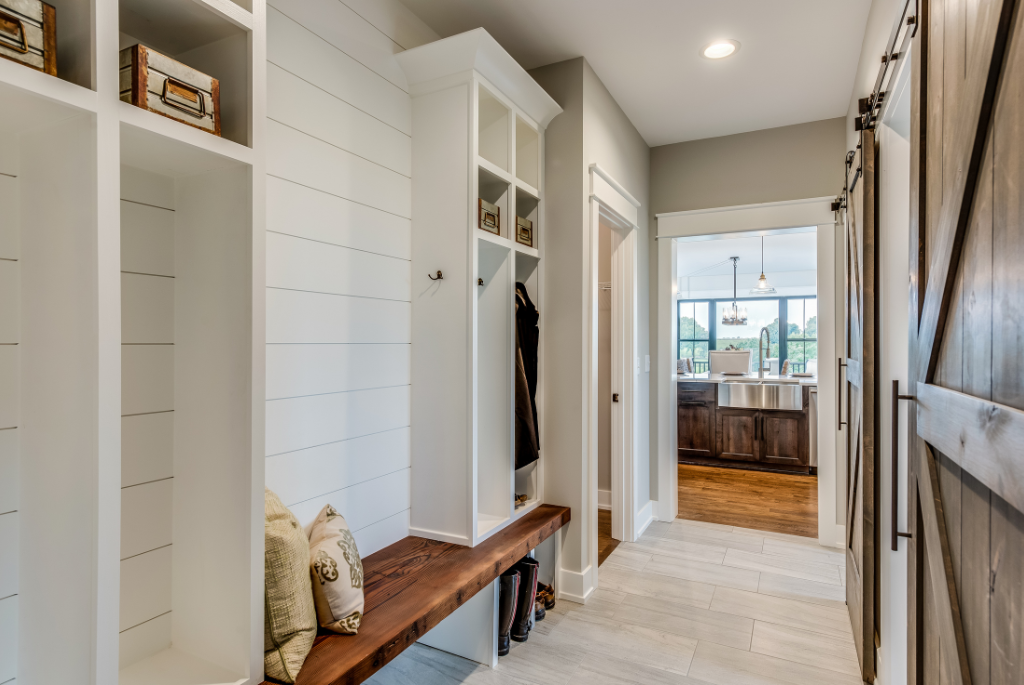
Builders must pay attention to which features are important to buyers rather than adding amenities just because they’re expected. Smaller homes can feel more functional when they’re designed around daily living. For instance, efficient layouts, flexible rooms and practical storage can help homeowners get more out of less space. And outdoor living areas provide extra usable space without adding more interior square footage.
Energy-efficient features are another idea for new homes. While these features may increase up-front construction costs, they can help lower monthly utility bills for buyers. Overall, crews need to consider a feature’s full value rather than only focusing on the initial cost.
Affordable housing strategies for builders
Smaller homes are just one part of a larger affordable housing plan. Builders can also evaluate floor plans, construction methods and product selections to determine where costs can be managed.
For example, a simpler floor plan can make construction easier. Shorter hallways, fewer corners and more efficient layouts can make the space easier to use. Using certain materials or specifications across multiple homes can also help simplify construction.
However, cutting space without thinking about how buyers will use the home could turn them away. The goal should be to maximize each square foot while reducing unnecessary space. Construction teams should continue offering more useful features, such as energy-efficient appliances and built-in storage options.
Home builders can reduce square footage without reducing value
The shift toward smaller homes encourages builders to reconsider what they consider standard amenities. Some features may be less important than buyers think, while others are just as valuable in a smaller home. For instance, one buyer may accept a smaller living room if the house has ample storage, a functional kitchen and a flexible room. Another buyer may prioritize energy-efficient features or outdoor space over an additional bedroom. These decisions depend on the market and the buyer.
Builders need to determine what buyers in a specific market are willing to lose and what features they prioritize. Then, they can use product segmentation to offer various size, feature and price packages rather than a one-size-fits-all plan for every market.
Smaller footprints create new opportunities
Single-family home affordability challenges continue to influence how home builders plan new houses, but reducing a dwelling’s size works only when the design meets the buyer’s needs. Smaller homes can support affordability, while carefully planned features can help attract buyers.
The most effective solution is to choose what matters rather than offer every bell and whistle. When builders make design and specification decisions based on local markets, they can create smaller homes that offer more value at an affordable price.
Source:
www.nahb.org/news-and-economics/press-releases/2025/02/affordability-headwinds-driving-home-buyers-interest-in-smaller-more-personalized-homes-in-2025